


Why Wear Cultural Streetwear Apparel
Last Updated: October 23, 2026
Quick Summary
Cultural streetwear apparel is one of the most authentic forms of self-expression available today, allowing you to wear pieces that honor your heritage and make a statement about who you are and where you come from. Every design, color, and graphic tells a story about identity and belonging, claiming space in a world that often asks you to blend in.
- The global streetwear market is projected to reach $734.05 billion by 2034, reflecting how deeply this style has embedded itself into mainstream culture.
- Streetwear emerged from hip-hop communities, skate parks, and surf breaks where young people created their own aesthetic because mainstream fashion wasn't speaking to them.
- Wearing cultural streetwear apparel functions as education, keeping cultural narratives alive in spaces where they might otherwise be invisible.
- Independent cultural fashion brands maintain control over their narrative and ensure cultural streetwear apparel remains authentic rather than becoming mass-produced commodities.
- Supporting independent cultural fashion brands means your money goes directly to creators who understand the culture they represent.
Table of Contents
- Cultural Streetwear Apparel as a Statement of Identity
- The Roots of Streetwear in Hip-Hop, Skate, and Urban Culture
- How to Style Cultural Streetwear for Maximum Impact
- Benefits of Wearing Cultural Clothing Beyond Fashion
- Respectful Cultural Appreciation Versus Appropriation
- Why Support Independent Cultural Fashion Brands
- Building Community and Belonging Through Shared Style
- Frequently Asked Questions
Cultural Streetwear Apparel as a Statement of Identity
Why wear cultural streetwear apparel? The answer goes deeper than fashion trends. At B Did It !!, cultural streetwear apparel is one of the most authentic forms of self-expression available today: wearing pieces that honor your heritage makes a statement about who you are and where you come from.
The global streetwear market is projected to reach $734.05 billion by 2034, according to Fortune Business Insights market analysis, reflecting how deeply this style has embedded itself into mainstream culture. But the real significance isn't about market size, it's about what wearing cultural streetwear means on a personal level.
Cultural streetwear apparel is a visual language: every design, color, and graphic tells a story about identity and belonging. Choosing pieces that reflect your cultural background claims space in a world that often asks you to blend in, saying: this is who I am, this is what I value, and I'm unapologetically proud of it.
The pieces we create at B Did It !! aren't generic drops. Each design carries weight, from the royal dignity of our Nwada graphic tee to the communal pride woven through our Àkísà Ọba Ankara bomber jacket. Wearing cultural streetwear apparel means joining a movement that celebrates excellence and refuses to apologize for its origins.

The Roots of Streetwear in Hip-Hop, Skate, and Urban Culture
Streetwear didn't emerge from high fashion runways. It came from hip-hop communities, skate parks, and surf breaks where young people created their own aesthetic because mainstream fashion wasn't speaking to them.
Hip-hop birthed the visual language we recognize now: oversized silhouettes, bold graphics, statement pieces that demanded attention. Skate culture brought an anti-establishment ethos; surf culture contributed a relaxed, individualistic approach that made streetwear accessible rather than pretentious.
What connects all three is rebellion. Street style emerged when young people took control of their own visual identity, mixing high and low, thrifted and new, and creating meaning through personal curation rather than brand loyalty.
This context explains why cultural streetwear apparel matters now. Streetwear is rooted in communities claiming their own narrative; wearing cultural streetwear apparel that honors your heritage joins that lineage, using clothing as a tool for identity and resistance against homogenization.
How to Style Cultural Streetwear for Maximum Impact
The best cultural streetwear apparel outfits start with intention, not impulse. Decide what story you're telling, then build the outfit around it.
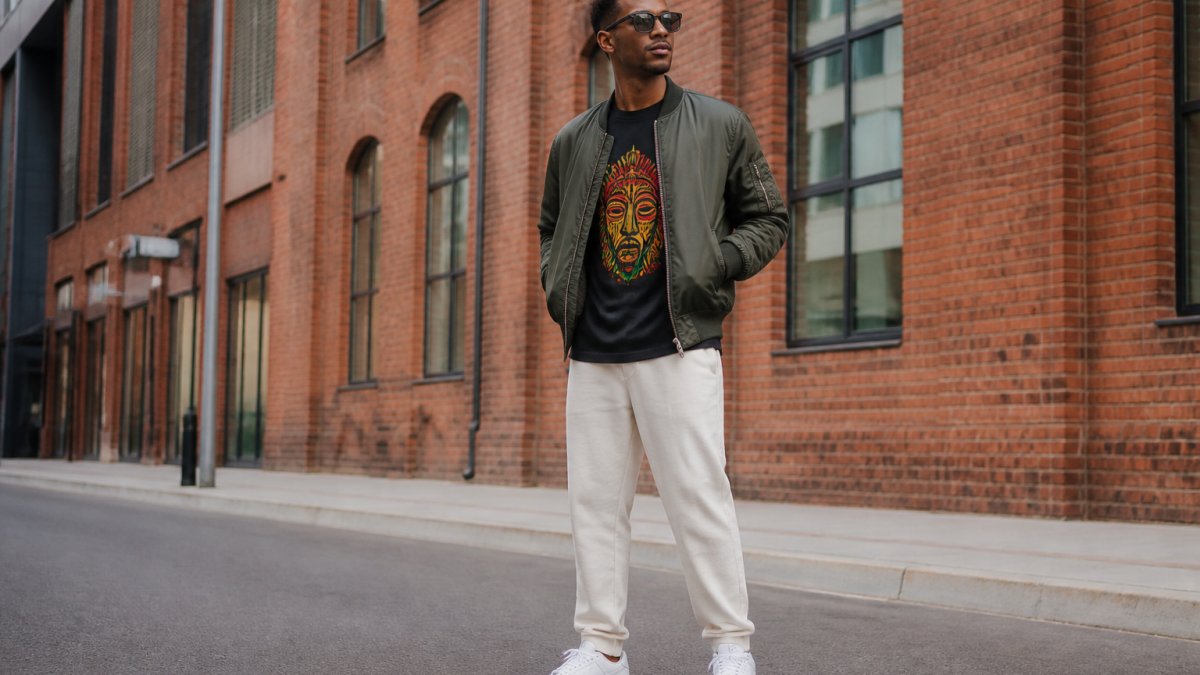
Start with one statement piece. Pick a single garment with a bold graphic or distinctive design that carries cultural weight, and let everything else support it.
Get the fit right. Oversized silhouettes are core to streetwear, but oversized doesn't mean shapeless. The Naija Collective Hoodie ($44.26) features a structured modern silhouette with ribbed cuffs that maintain definition.

Layer with a purpose. Layering is where cultural streetwear gets its depth. Try three moves that work in almost any context:
- The open-jacket frame. Wear the Àkísà Ọba Ankara bomber jacket open over a solid tee so the print frames your torso instead of swallowing it.
- The tee-under-hoodie stack. Put a graphic tee under an unzipped hoodie so the cultural reference peeks out at the neckline and hem.
- The monochrome base. Build a base of black, white, or gray, then add one cultural piece. This keeps the outfit readable and lets the cultural reference do its work.
Coordinate color deliberately. The marigold, magenta, and cerulean palette in our Àkísà Ọba jacket creates visual authority. Pair it with black basics, or layer it open over a minimalist tee.
Match the piece to the context. The same piece hits differently at a cultural event versus campus versus casual weekend wear.
Think about cost per wear. Cultural streetwear is an investment, so treat it like one. Buy fewer, wear more, and let each piece earn its place in your rotation.
Care for the piece so it lasts. Wash graphic tees inside out in cold water and hang dry to protect the print. Spot-clean structured jackets and store them on a wide hanger to keep the shoulders sharp.
Benefits of Wearing Cultural Clothing Beyond Fashion
Wearing cultural streetwear apparel delivers benefits far beyond looking good.
First, there's the psychological impact of alignment. When your clothing reflects your values and identity, you carry yourself differently.
Second, cultural streetwear apparel functions as education. Every piece tells a story. The Nwada tee teaches whoever sees it about Igbo cultural concepts, about the sacred authority and moral leadership of women in that tradition. When you wear it, you keep cultural narratives alive in spaces where they might otherwise be invisible.
Third, there's community. Wearing cultural streetwear apparel signals belonging: people who recognize the references or share the cultural background immediately see you as part of their community.
Finally, wearing cultural clothing is an act of reclamation. For diaspora communities especially, it's a way of saying: my culture is valuable, it's worth celebrating, and I'm not waiting for permission or mainstream validation to claim it.
Respectful Cultural Appreciation Versus Appropriation
This conversation matters, and it's the one most streetwear guides skip. Wearing cultural streetwear apparel responsibly means understanding the line between appreciation and appropriation, and the line is more practical than people think.
Appreciation means engagement with genuine understanding. It means learning the stories behind the designs, respecting their origins, and choosing pieces created by people from those cultures.
Appropriation strips meaning. It takes cultural elements, removes the history, and repackages them as trend. A 2024 study from California State University examined undergraduate perceptions of cultural appropriation in streetwear acknowledged that this tension exists and that young people are increasingly conscious of these distinctions.
Here's a practical framework you can actually use before you buy or wear a piece.
1. Identify the reference. Ask what specific cultural element the design draws on: a textile tradition, a symbol, a language, a historical figure, a regional craft.
2. Trace the origin. Find out where the element comes from and who it belongs to. Check the brand's about page, product description, and designer notes.
3. Check who benefits. Ask whether the people behind the culture are involved in making or profiting from the piece. Look for collaborations with community artisans, named designers from that heritage, or transparent sourcing.
4. Assess the symbol's weight. Some elements are decorative; others are sacred, ceremonial, or reserved.
5. Wear it with context, not as costume. Don't treat cultural streetwear apparel as a costume or a phase.
If you're wearing cultural streetwear apparel from outside that culture, ask yourself: Am I learning? Am I supporting creators from this community?
Appreciation isn't about permission from outsiders; it's about doing the homework. The more specific you can be about what you're wearing and why, the more clearly you're on the right side of the line.
Why Support Independent Cultural Fashion Brands
Mass-market brands have discovered cultural streetwear apparel, producing knockoffs, watering down designs, and profiting from aesthetics they didn't create.
Independent cultural fashion brands like B Did It !! operate differently. We're not chasing trends; we create intentional drops rooted in authentic cultural narratives. The Àkísà Ọba Ankara bomber jacket exists because West African textile traditions deserve celebration, not because market research suggested geometric prints would sell.
When you support independent cultural fashion brands, your money goes directly to creators who understand the culture they represent, funding meaningful pieces rather than mass-produced approximations and signaling that cultural authenticity matters.
Independent brands also maintain control over their narrative. We decide which stories get told, which cultural elements get highlighted, which voices get amplified. That control ensures cultural streetwear apparel remains authentic rather than becoming a commodity stripped of meaning.
There's also exclusivity. Mass-market brands thrive on volume and restocking; independent cultural fashion brands create limited drops. Our pieces aren't endlessly available, so you're wearing something genuinely rare, not one of thousands of identical items produced overseas.
Building Community and Belonging Through Shared Style
Streetwear has always been about community. From the earliest days in hip-hop and skate culture, the style functioned as a visual marker of belonging. Cultural streetwear apparel amplifies this.
When you wear pieces that celebrate your heritage, you broadcast membership in a community. Other people wearing similar pieces recognize you immediately. At cultural events, festivals, and community gatherings, these shared aesthetic choices create instant connection. You don't need to introduce yourself; your clothing does that work.
The community aspect extends beyond visual recognition. Wearing cultural streetwear apparel signals values: you care about heritage, you support independent creators, you refuse to assimilate into generic mainstream fashion. Those values attract people with similar priorities, so you're more likely to build authentic friendships.
B Did It !! facilitates this through VIP access to exclusive drops and content. When you register for VIP, you're not just getting early access to new pieces, you're joining a community of people who understand what this movement represents.
The belonging extends into digital spaces too. Social media communities centered on streetwear culture thrive on shared aesthetics and values, and wearing recognizable pieces puts you in conversation with thousands of people celebrating the same heritage and style philosophy.
Wearing cultural streetwear apparel is an act of cultural pride, community connection, and authentic self-expression. It's a rejection of homogenized fashion in favor of pieces that carry meaning.
Style Element |
How It Strengthens Cultural Streetwear |
Impact |
|---|---|---|
Bold Graphics |
Carries cultural narratives and stories |
Educates viewers, signals belonging |
Limited Drops |
Maintains exclusivity and authenticity |
Prevents mass-market dilution |
Heritage References |
Honors specific cultural traditions |
Creates genuine connection vs. trend-chasing |
Community Access |
Connects wearers with shared values |
Builds lasting belonging beyond fashion |
Independent Creation |
Ensures cultural control and accuracy |
Supports creators from those communities |
Frequently Asked Questions
What makes cultural streetwear apparel different from mainstream fashion?
Cultural streetwear apparel goes beyond trends—it carries meaning rooted in heritage, history, and identity. Unlike mass-produced fashion, authentic cultural streetwear tells stories through intentional design, connecting wearers to their roots and communities. The difference lies in purpose: cultural apparel celebrates and honors specific traditions, values, and experiences, making it a vehicle for self-expression rather than just a commodity.
How can wearing cultural clothing strengthen my sense of identity?
Wearing cultural clothing creates a visible connection to your heritage and values. When you choose apparel that reflects your background—whether Nigerian pride, African diaspora connection, or cultural celebration—you're making a daily declaration about who you are and what matters to you.
How do I know if cultural streetwear is authentic and not just surface-level design?
Authentic cultural streetwear is rooted in real stories, symbols, and cultural significance. Look for brands that explain the meaning behind their designs—the cultural references, historical context, and why specific colors, patterns, or imagery matter. Brands like B Did It !! create pieces with intentional storytelling, such as the Nwada graphic honoring Igbo cultural heritage or the Àkísà Ọba Bomber drawing from West African textile traditions. Authentic pieces connect you to something deeper than aesthetics.
Is cultural streetwear only for people deeply connected to that specific culture?
No. Cultural streetwear resonates across the diaspora and beyond. Whether you're first-generation, diaspora-connected, or simply someone who values cultural expression and community, wearing cultural apparel is about respect and celebration. The key is approaching it with genuine appreciation for the stories and values it represents, not treating it as a trend. Many diaspora members find that cultural streetwear helps them stay connected to their roots while building identity on their own terms.
